computer

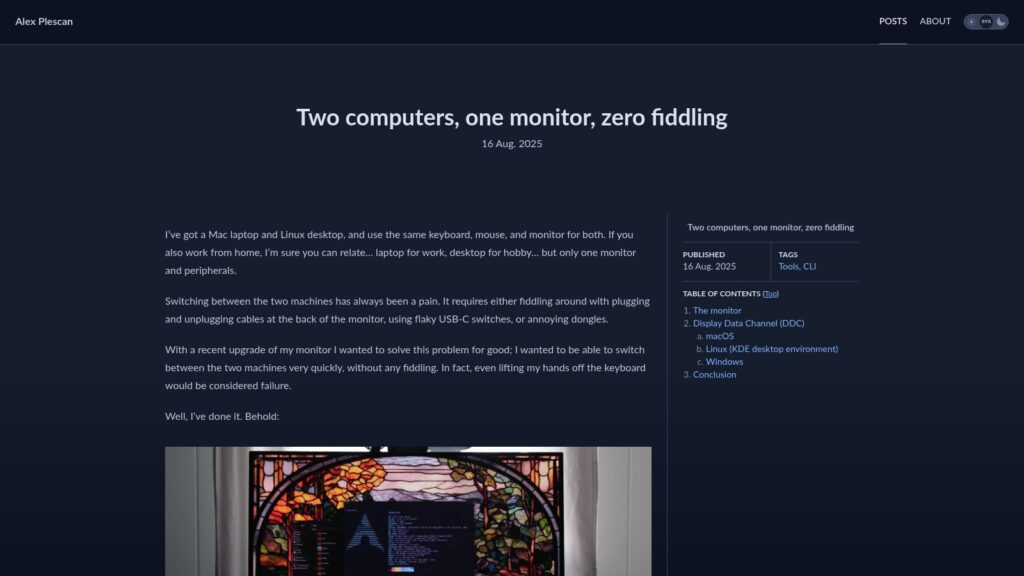
Two Computers, One Monitor, Zero Fiddling

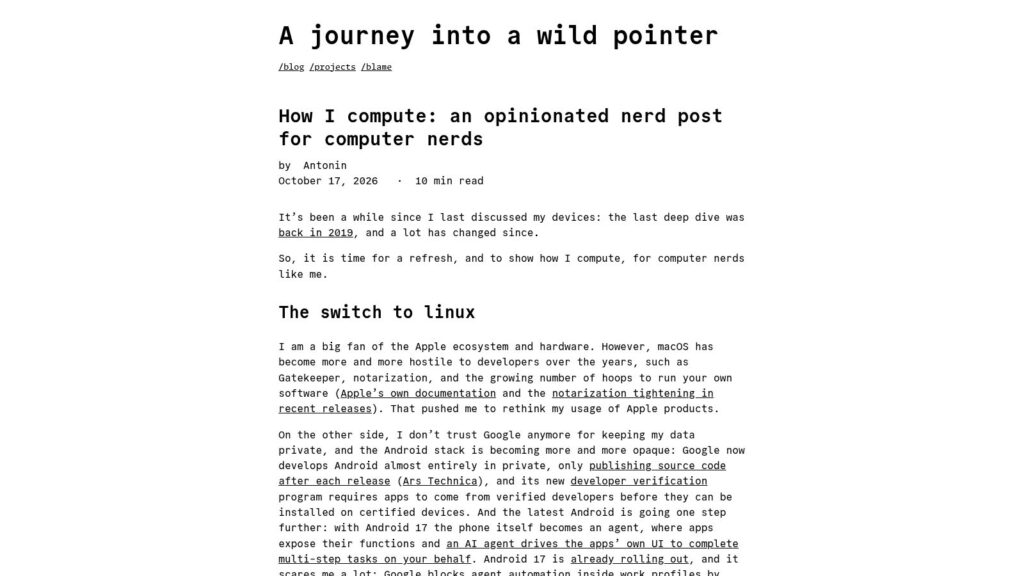
Alex Plescan describes setting up a dual-computer workstation using one MSI MPG 321URX monitor with built-in KVM functionality, allowing seamless switching between a Mac laptop and a Linux desktop without physically changing cables. By leveraging Display Data Channel (DDC) commands and software like m1ddc on macOS and ddcutil on Linux, he enables keyboard shortcuts to switch the monitor’s input source instantly, eliminating the need to touch the monitor or peripherals.

https://alexplescan.com/posts/2025/08/16/kvm/

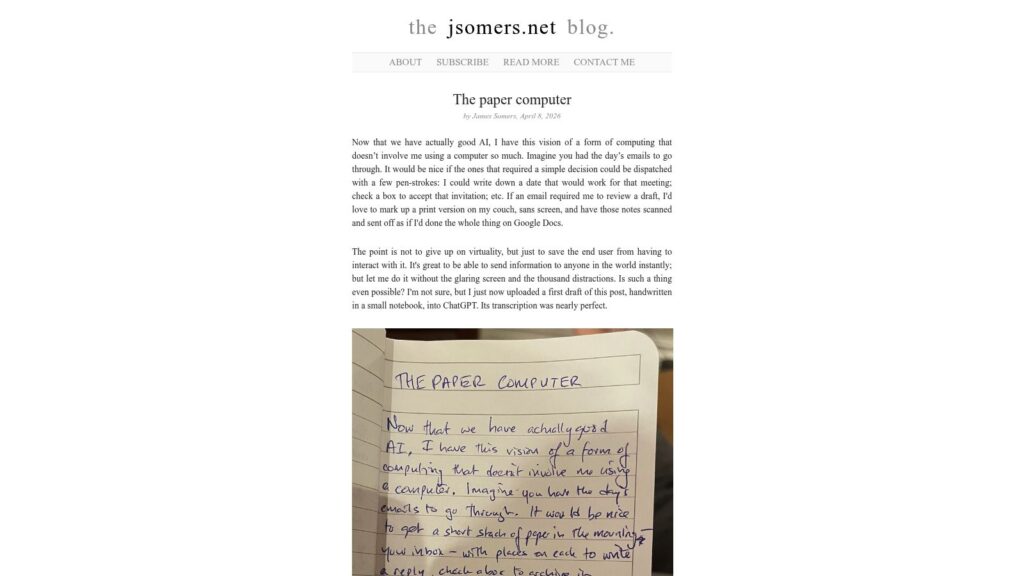
The Paper Computer

In his blog post “The paper computer,” James Somers envisions a future where computing blends the physical and virtual worlds, allowing people to interact with digital tasks through tangible, paper-like methods such as handwriting notes or organizing physical cards, while still retaining the flexibility and connectivity of digital systems. He reflects on the limitations of screens and multitasking distractions and imagines technologies that enable focused, single-purpose modes of interaction, aiming to reduce screen time and foster a more natural, less frenetic experience with technology.

https://jsomers.net/blog/the-paper-computer

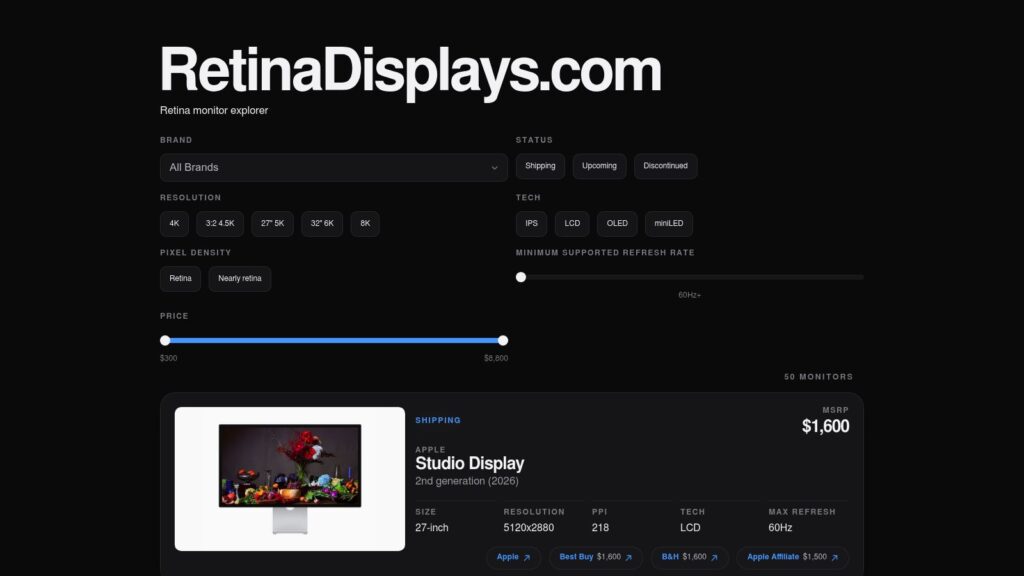
RetinaDisplays.com

RetinaDisplays.com offers a comprehensive explorer for high-resolution retina monitors, showcasing 50 models across various brands like Apple, LG, Samsung, ASUS, Dell, and more. The site provides detailed specs including size, resolution, pixel density, display technology, refresh rates, MSRP, and purchasing links for popular monitors such as Apple's Studio Display, LG UltraFine, and ASUS ProArt series. This resource highlights options ranging from 4K to 8K displays, covering both discontinued and upcoming models for professionals and enthusiasts seeking premium visual clarity.

https://retinadisplays.com/

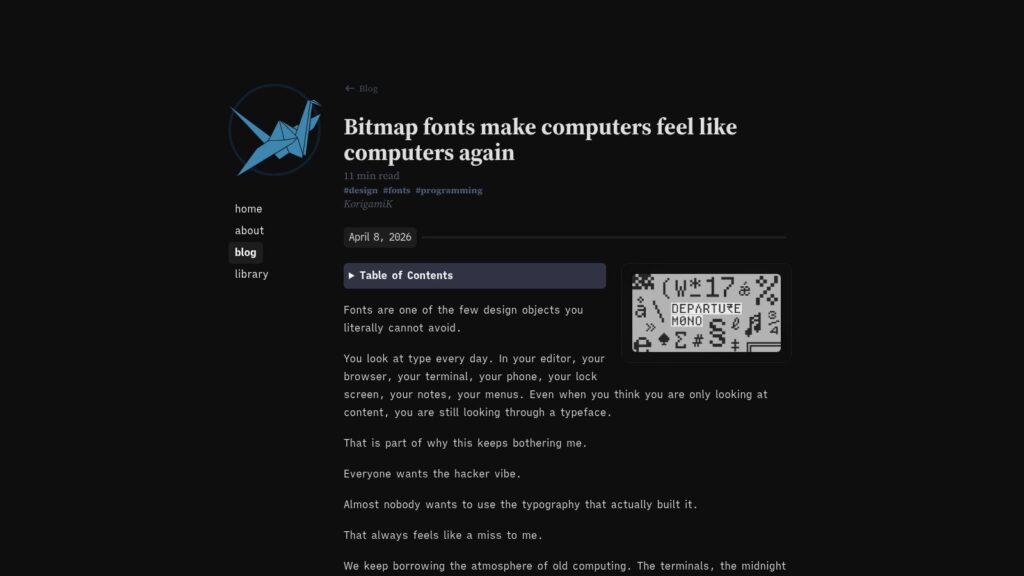
Bitmap Fonts Make Computers Feel Like Computers Again

The article argues that bitmap fonts, once essential due to screen constraints, remain uniquely expressive and precise compared to modern vector fonts, especially for programmers who need clear symbol distinction. It highlights the emotional and functional power of bitmap fonts, advocating for their renewed use in coding, design, and digital media to bring back the authentic “computer” feel that modern typography often lacks.

https://korigamik.dev/blog/bitmap_fonts/

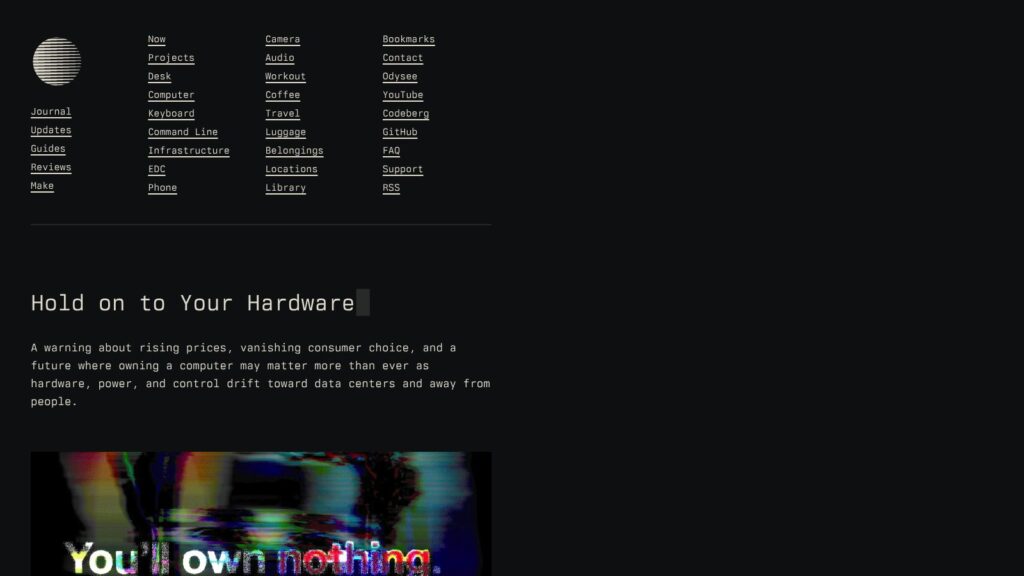
Hold on to Your Hardware

The article warns of a structural shift in the consumer hardware market driven by soaring demand from data centers and AI companies, causing long-term shortages and sharply rising prices for RAM, SSDs, and other components. As major manufacturers prioritize large enterprise clients over consumers, hardware affordability and availability are declining, threatening technological independence and signaling a future where owning and upgrading personal computers may become increasingly difficult or impractical.

https://xn--gckvb8fzb.com/hold-on-to-your-hardware/

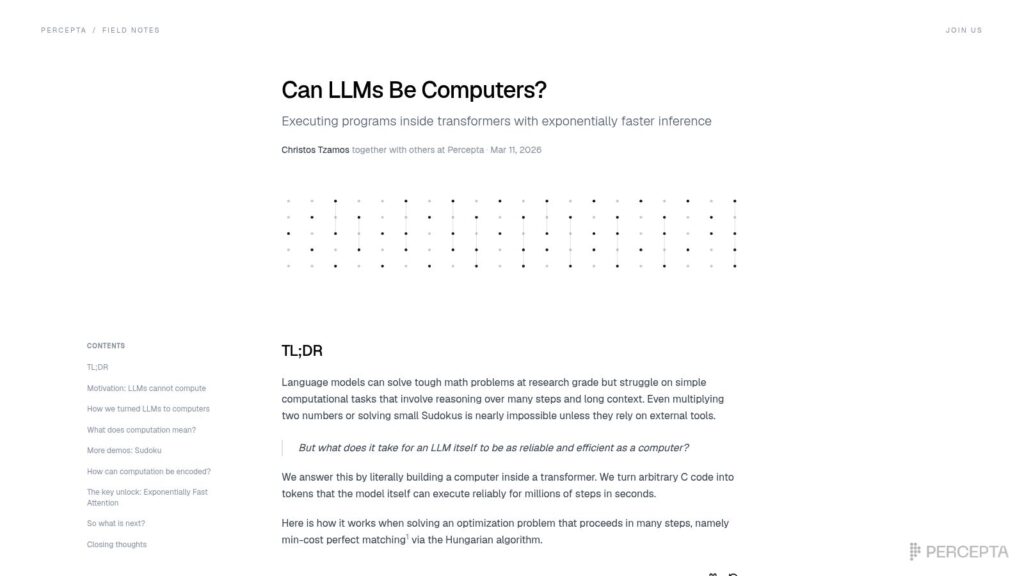
Can LLMs Be Computers?

Researchers at Percepta demonstrate that language models (LLMs) can internally execute programs by embedding a computer within a transformer architecture, bypassing typical reliance on external tools for computation. By implementing an efficient decoding scheme that leverages 2D attention heads, their approach performs execution traces with logarithmic-time attention lookups, enabling millions of computational steps within a single transformer run. This enables reliable, step-by-step internal computation of complex tasks like solving Sudoku or min-cost perfect matching, marking a significant advancement in LLMs’ ability to perform exact, long-horizon computations autonomously.

https://www.percepta.ai/blog/can-llms-be-computers

If Computers Are the Future, Why Are Computer Users Expected to Be Permanently Illiterate?

Jeff Johnson reflects on his early experience with computers, arguing that ordinary users are fully capable of becoming skilled “power users” if given the opportunity, as demonstrated by his and his father's self-taught proficiency with the Apple II+. He criticizes modern computer vendors, especially Apple, for increasingly locking down devices and simplifying interfaces in a way that limits user autonomy and fosters permanent illiteracy, warning that this trend—amplified by AI—risks disempowering users and curtailing genuine learning and growth.

https://lapcatsoftware.com/articles/2026/3/5.html

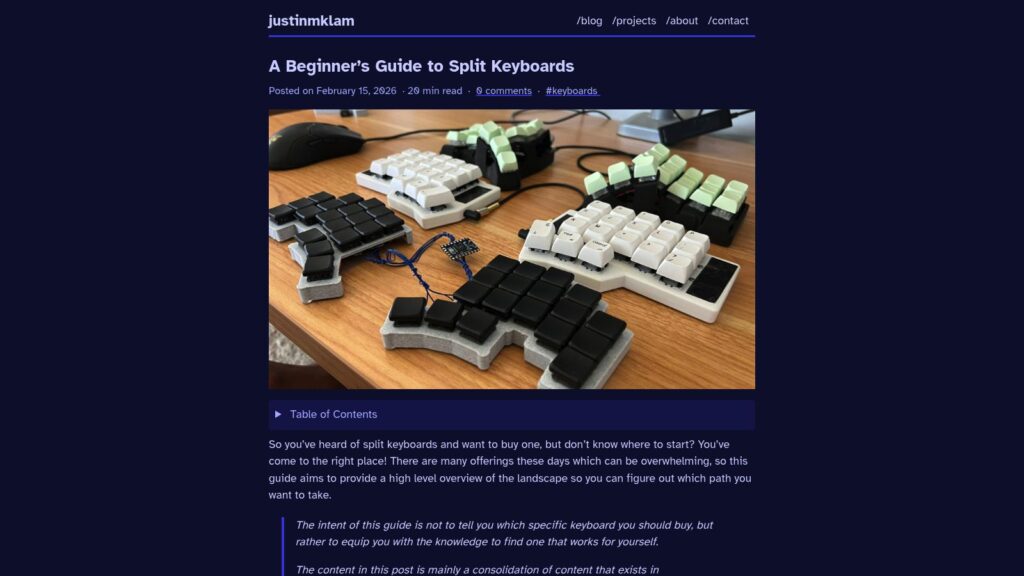
A Beginner’s Guide to Split Keyboards

Extreme TLDR: A Beginner's Guide to Split Keyboards
Overview of split keyboards, emphasizing ergonomic benefits like natural hand positioning. Discusses types (row-staggered, column-staggered, ortholinear), time commitment for learning new layouts, and options for those short on time. Two paths: easy-to-learn layouts and more customizable options for higher ergonomics. Covers features, geometry, tenting, pointing devices, wired vs wireless, and keymap customization. Encourages breaks and professional help for pain.

https://www.justinmklam.com/posts/2026/02/beginners-guide-split-keyboards/

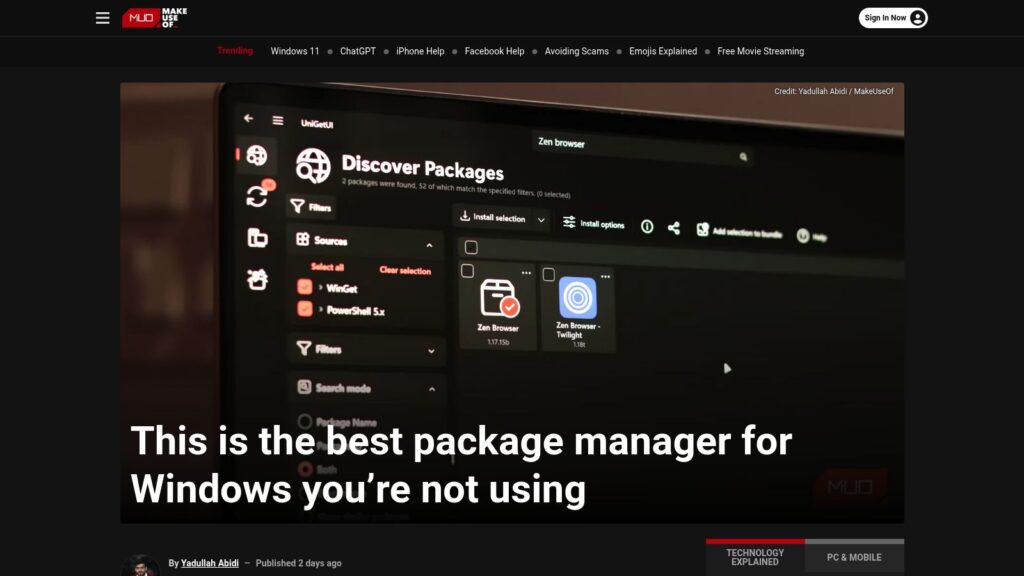
This Is the Best Package Manager for Windows You’re Not Using

UniGetUI is a new, user-friendly package manager for Windows that combines several existing package managers (like Winget and Chocolatey) into a single interface. It simplifies app installations, updates, and management, allowing users to search and install software across multiple sources without command-line usage. Key features include bulk installations, background update checks, and the ability to create and share app bundles. UniGetUI is free, open-source, and aims to streamline the often frustrating app management experience on Windows.

https://www.makeuseof.com/best-package-manager-for-windows/

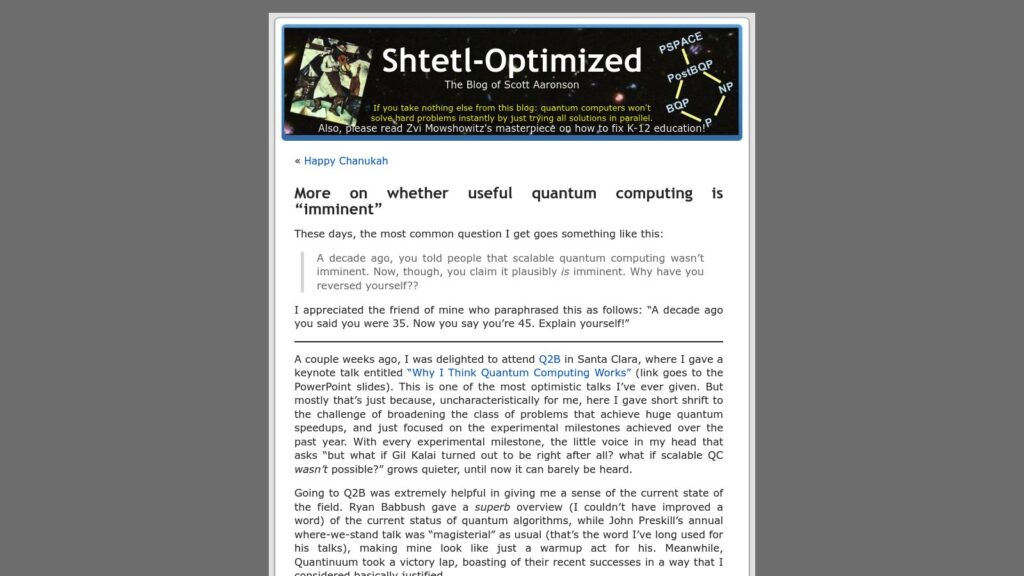
More on Whether Useful Quantum Computing Is “imminent”

Scott Aaronson's blog discusses the evolving outlook on quantum computing, noting its potential imminence after years of skepticism. He attended the Q2B conference, where he observed significant advancements in quantum algorithms and hardware. Although he remains cautious about exaggerations in the field, particularly regarding claims made by certain companies like IonQ, he acknowledges impressive experimental milestones achieved by players like Google and Quantinuum. Aaronson emphasizes the importance of transitioning to post-quantum cryptography as the field progresses, while reiterating that current practical applications for quantum computing largely remain unchanged from historical predictions. He concludes with a warning about the potential for sensitive estimations regarding the capabilities of quantum systems to not be publicly shared due to security concerns.

https://scottaaronson.blog/?p=9425

Neutral Atom Quantum Computing: 2026’s Big Leap

Next-level quantum computers using neutral atoms as qubits aim for error correction by 2026, led by companies like Microsoft, Atom Computing, and QuEra. Industry views on progress differ, with challenges in speed and commercial viability. Neutral atoms allow for better error correction and scalability. Upcoming quantum machines are expected to have significant advancements but achieving truly transformative technology remains a long-term goal.

https://spectrum.ieee.org/neutral-atom-quantum-computing

DRAM Prices Are Spiking, but I Don’t Trust the Industry’s Reasons Why

DRAM prices surged globally in 2025, more than doubling due to demand from AI data centers, with contract prices rising 171.8% year-over-year. Retail prices saw dramatic increases, and shortages persist, with major manufacturers slow to ramp up production, citing previous market volatility. Skepticism surrounds the industry's claims of supply-demand imbalance, given their history of price-fixing and profit-focused strategies. The situation is complex, combining genuine demand with potential artificial inflation of prices. The outlook suggests high prices could continue into 2026 or longer, unless the AI demand declines or production capacity increases.

https://www.xda-developers.com/dram-prices-spiking-dont-trust-industry-reasons/

Introduction to Computer Music

Introduction to Computer Music is an electronic textbook by Prof. Jeffrey Hass designed for first-year studies, covering topics like acoustics, studio gear, MIDI, synthesis, digital audio, and music history. Initially launched in 2004, it has evolved over nearly twenty years, providing comprehensive resources for composers and audio engineers, available for free. Prof. Hass, a retired educator and composer from Indiana University.

https://cmtext.com/

Scroll to Top