linux

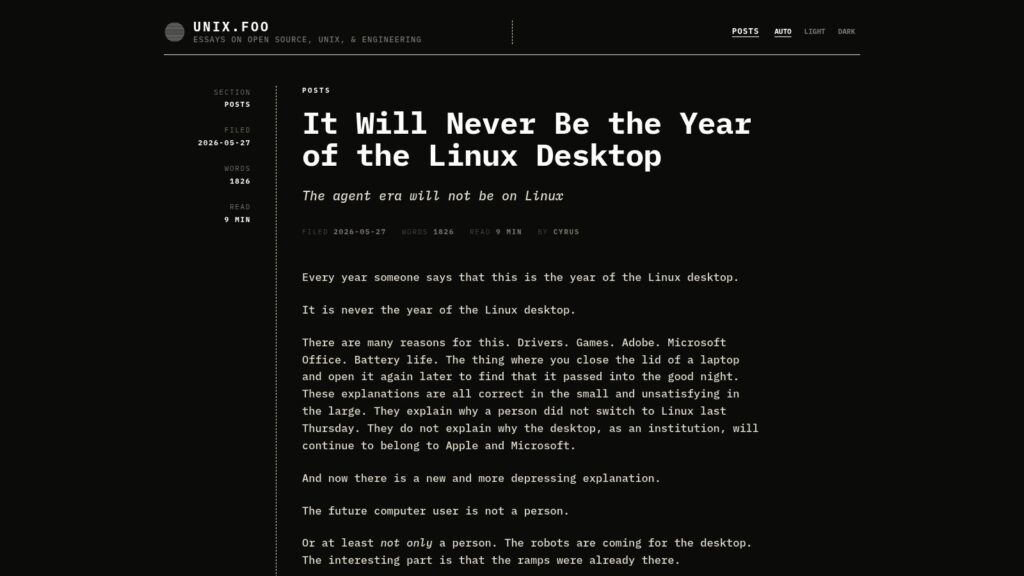
It Will Never Be the Year of the Linux Desktop

The article argues that the long-anticipated “year of the Linux desktop” will never arrive because the future of desktop computing is increasingly defined by agent-driven interaction rather than human use alone. While macOS leads with a robust, default accessibility infrastructure that now enables AI agents to control the system effectively, Windows struggles with legacy app support despite having strong accessibility APIs, and Linux faces fragmentation and lack of centralized effort to unify similar capabilities. This shift toward agent compatibility favors platforms with cohesive ecosystems and dedicated resources, which Linux lacks, making it unlikely to dominate the desktop market.

https://unix.foo/posts/it-will-never-be-the-year-of-the-linux-desktop/

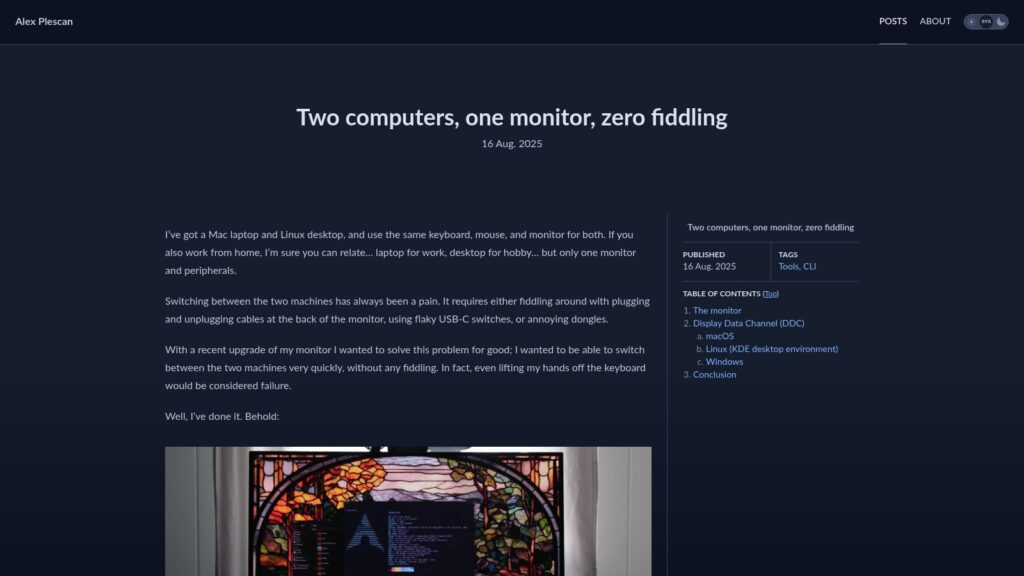
Two Computers, One Monitor, Zero Fiddling

Alex Plescan describes setting up a dual-computer workstation using one MSI MPG 321URX monitor with built-in KVM functionality, allowing seamless switching between a Mac laptop and a Linux desktop without physically changing cables. By leveraging Display Data Channel (DDC) commands and software like m1ddc on macOS and ddcutil on Linux, he enables keyboard shortcuts to switch the monitor’s input source instantly, eliminating the need to touch the monitor or peripherals.

https://alexplescan.com/posts/2025/08/16/kvm/

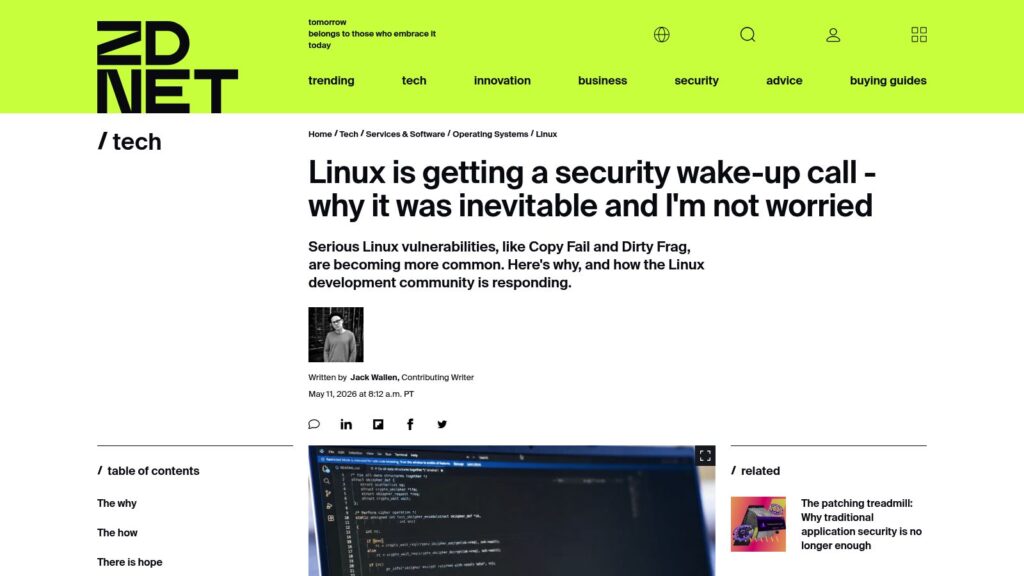
Linux Is Getting a Security Wake-up Call – Why It Was Inevitable and I’m Not Worried

Linux is experiencing a rise in serious security vulnerabilities, such as Copy Fail and Dirty Frag, driven largely by its increased popularity and the use of AI by bad actors to quickly find exploitable flaws. Despite these challenges, the Linux development community remains highly responsive, rapidly issuing patches and developing mitigation strategies, and continues to uphold Linux's reputation as a secure operating system.

https://www.zdnet.com/article/linux-security-wake-up-call-copy-fail-dirty-frag-why-inevitable/

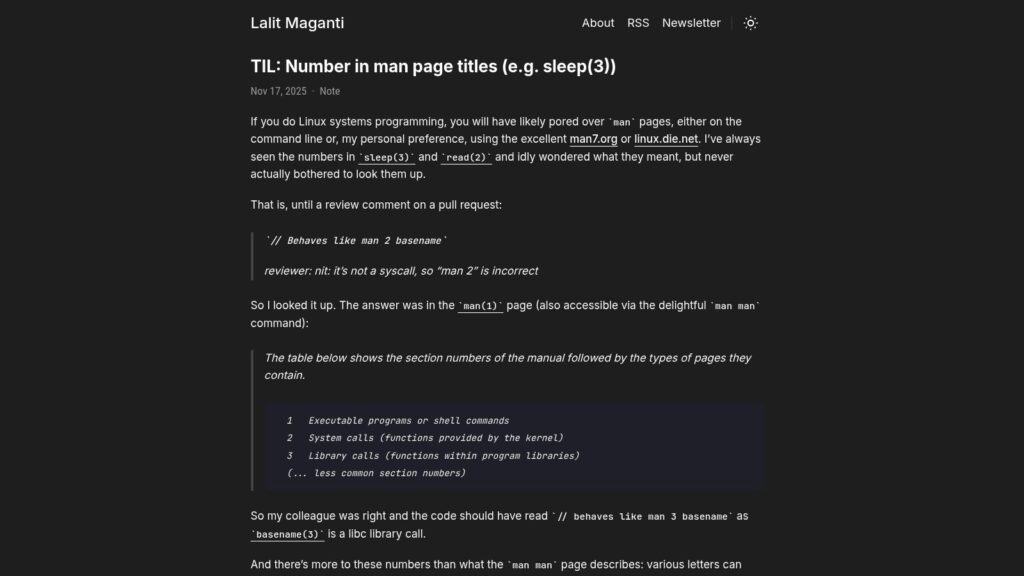
TIL: Number in Man Page Titles (E.g. Sleep(3))

The article explains the meaning of the numbers found in Linux man page titles, such as sleep(3) or read(2). These numbers indicate the manual section: for example, section 1 covers executable programs, section 2 system calls, and section 3 library calls, with additional suffix letters denoting standards like POSIX or X documentation. The author discovered this detail after a code review clarified the correct section reference for a function’s man page.

https://lalitm.com/til-number-in-man-page-titles-e-g-sleep-3/

Wine 11 Rewrites How Linux Runs Windows Games at the Kernel Level, and the Speed Gains Are Massive

Wine 11 introduces a major rewrite in how Linux handles Windows game synchronization by implementing the new NTSYNC kernel driver, which replaces inefficient user-space workarounds like esync and fsync with kernel-level synchronization, resulting in massive performance improvements. Additionally, Wine 11 completes the WoW64 architecture for seamless 32-bit and even 16-bit application support on 64-bit systems, enhances Wayland compatibility, and includes numerous fixes and improvements that together represent the most significant advancement in Linux gaming via Wine since the emergence of Proton.

https://www.xda-developers.com/wine-11-rewrites-linux-runs-windows-games-speed-gains/

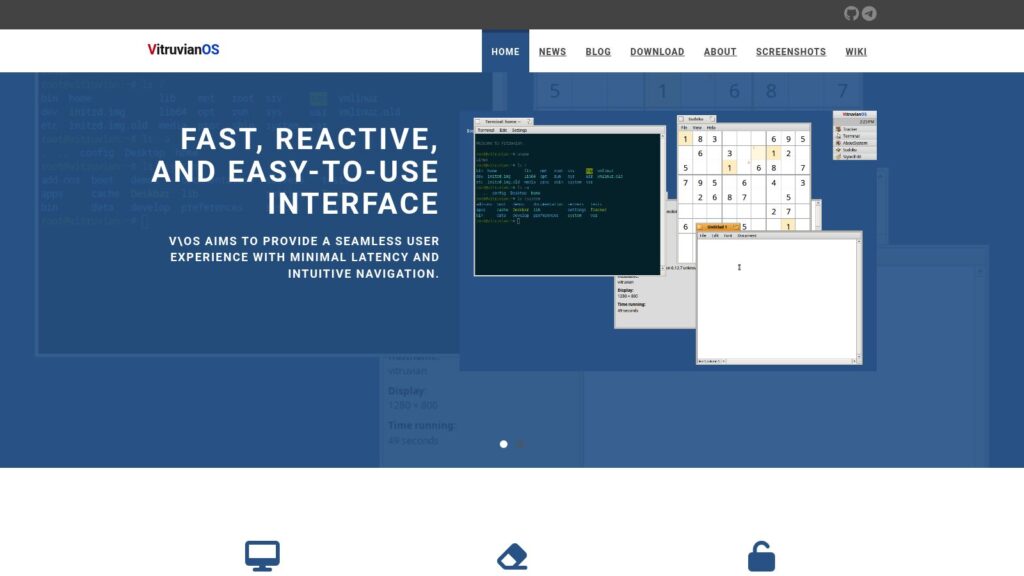
VitruvianOS

VitruvianOS (V\OS) is a free, open-source Linux-based operating system inspired by BeOS and Haiku, designed to deliver a fast, intuitive, and user-friendly desktop experience. It features a highly integrated desktop environment, supports BeOS/Haiku runtime with minimal API changes, and includes a custom Linux kernel subsystem called Nexus for enhanced device tracking and messaging. The system emphasizes privacy, ease of use, and community engagement, offering an “out of the box” solution with a focus on performance and simplicity.

https://v-os.dev/

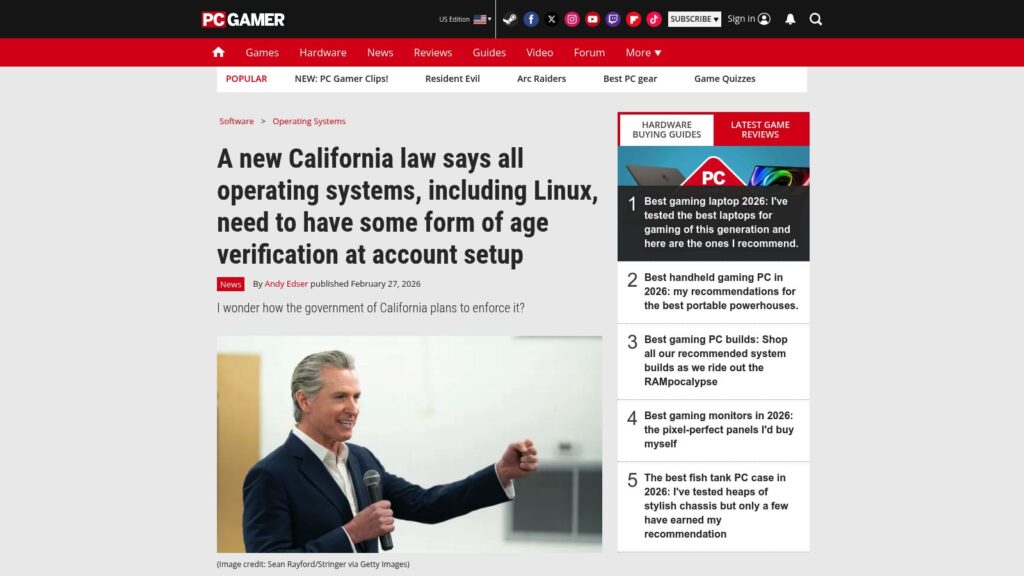
A New California Law Says All Operating Systems, Including Linux, Need to Have Some Form of Age Verification at Account Setup

California mandates operating systems, including Linux, implement age verification during account setup by January 2027, requiring users to disclose age-related data. Compliance concerns emerge, especially regarding enforcement and privacy implications.

https://www.pcgamer.com/software/operating-systems/a-new-california-law-says-all-operating-systems-including-linux-need-to-have-some-form-of-age-verification-at-account-setup/

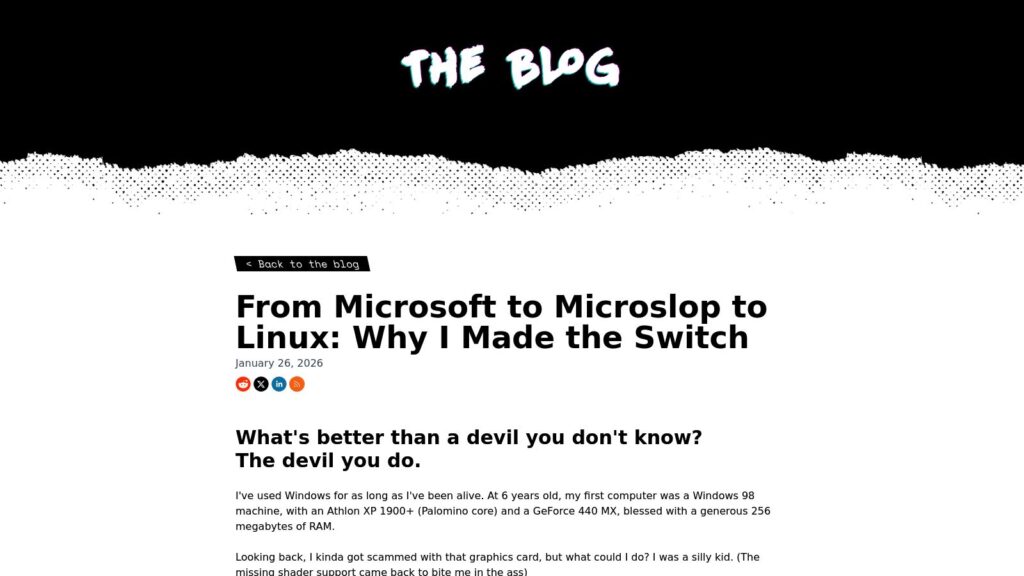
Bogdan’s Blog

TLDR: The author switched from Windows to Linux after two decades due to frustrations with Microsoft's intrusive updates, ads, and bugs. Key issues included forced updates that caused system instability and unnecessary features. After trying Linux and facing challenges, they found it ultimately more reliable and user-friendly for their needs, especially in software development and content creation, despite some limitations in gaming and 3D modeling. They criticize Microsoft's evolving practices as detrimental to user experience.

https://www.himthe.dev/blog/microsoft-to-linux

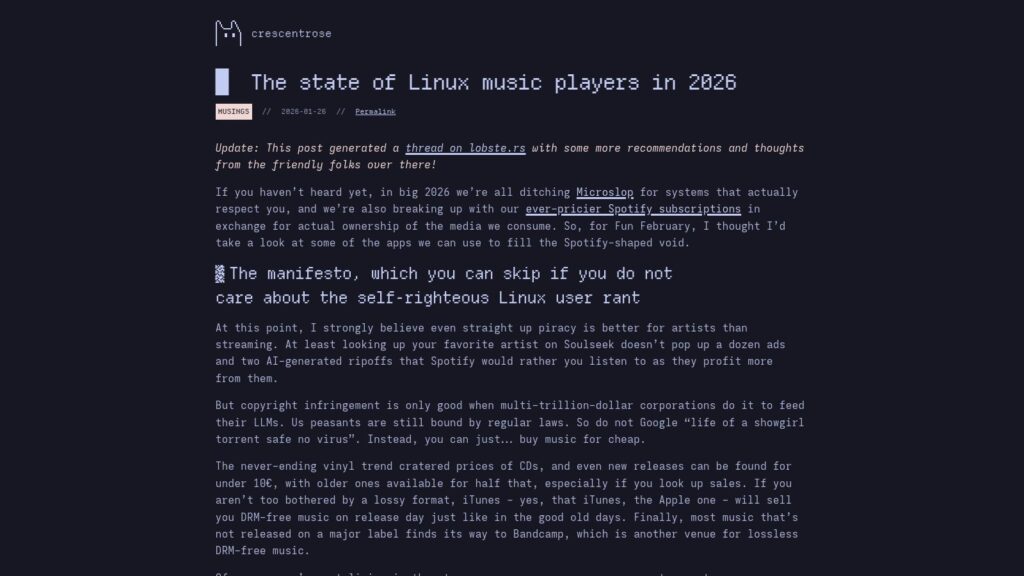
The State of Linux Music Players in 2026

In 2026, users are moving away from mainstream services like Microsoft and Spotify in favor of Linux music players that support media ownership. The article reviews various players, emphasizing features such as user-friendly interfaces and library management. Key players include:

  • Amberol: Simple and minimal, great for casual use.
  • Euphonica: MPD client with good features, stylish design but some quirks.
  • Feishin: Fully-featured and user-friendly for self-hosted services, despite Electron-based drawbacks.
  • Lollypop: Innovative but has a clunky user experience.
  • Recordbox: Offers a smooth onboarding and good library management.
  • Tauon: Tailored for power users, with extensive features and network source support.
  • Strawberry & Clementine: Classic options with outdated interfaces but functional.

Overall, the landscape for Linux music players is improving, providing users with diverse, customizable options for music enjoyment.

https://crescentro.se/posts/linux-music-players-2026/

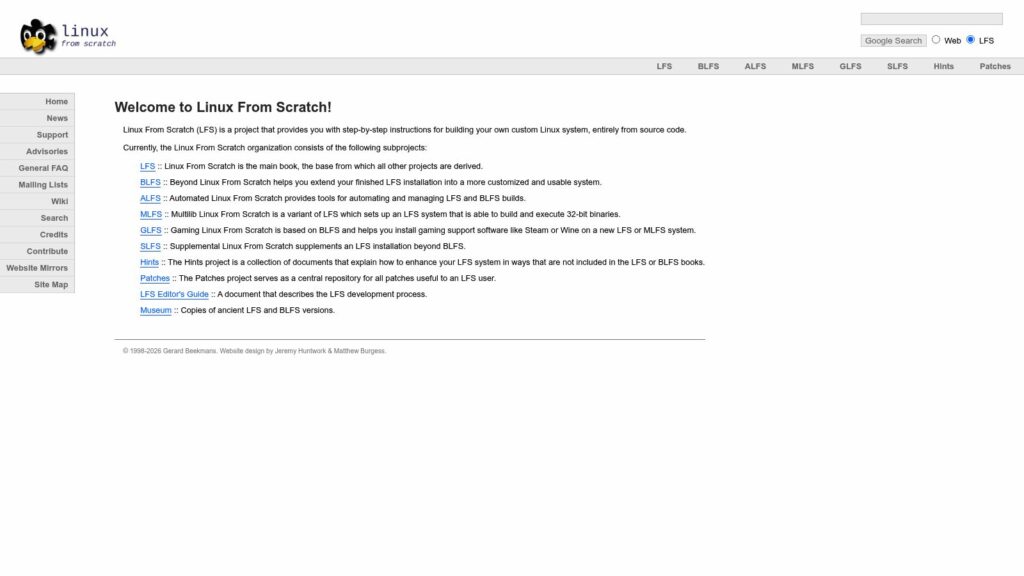
Linux From Scratch

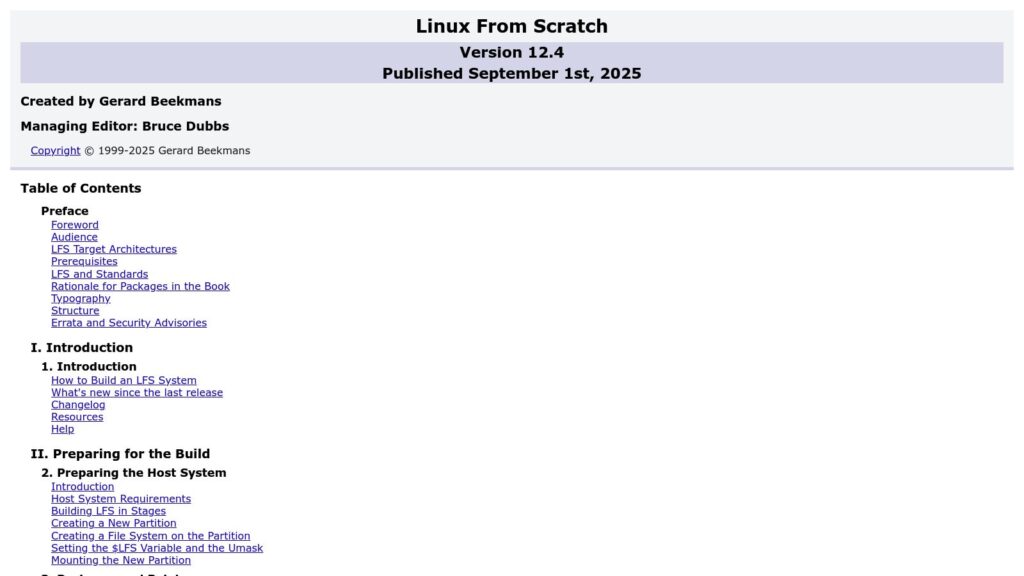
Linux From Scratch 12.4, published September 1, 2025, by Gerard Beekmans, guides users through building a complete Linux system from source code. It includes sections on preparation, building the software toolchain, system configuration, and making the system bootable, aiming for audiences interested in LFS and practical Linux skills. The document outlines prerequisites, architecture choices, and the rationale behind package selections.

https://www.linuxfromscratch.org/lfs/view/stable/

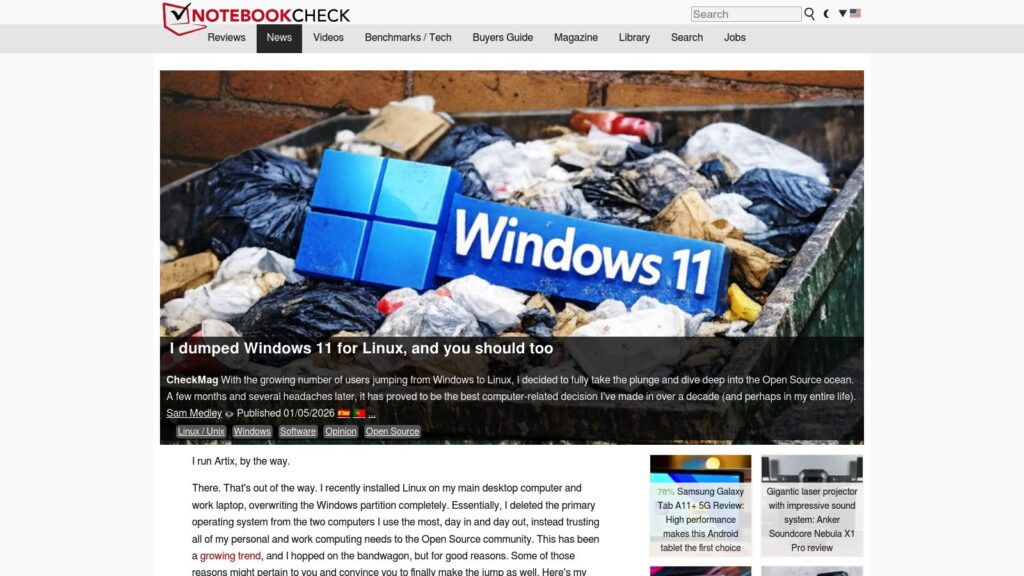
I Dumped Windows 11 for Linux, and You Should Too

Switched from Windows 11 to Linux, finding it a rewarding experience after frustrations with Windows' telemetry, instability, and crashes. After trying various distros and ultimately choosing Artix for its speed and control, I faced challenges with driver installations and software availability but enjoyed the flexibility and system performance. Linux reignited my interest in computing, providing a stable and enjoyable environment, making it a worthwhile transition from Windows.

https://www.notebookcheck.net/I-dumped-Windows-11-for-Linux-and-you-should-too.1190961.0.html

Why People Keep Flocking to Linux in 2025 (and It’s Not Just to Escape Windows)

Linux desktop market share grew from 1.5% (2020) to above 5% (2025), driven by distrust in Windows, especially after users' dissatisfaction with Microsoft’s support approaches. Many Windows users, facing hardware restrictions and privacy concerns, are switching to Linux, with Zorin OS reporting 78% of its recent downloads from Windows users. Overall, when including Android and ChromeOS, Linux could claim a dominant position in end-user operating systems, surpassing Windows. Drivers for this trend include simplified usability, improved gaming support, and privacy concerns.

https://www.zdnet.com/article/why-people-keep-flocking-to-linux-in-2025-and-its-not-just-to-escape-windows/

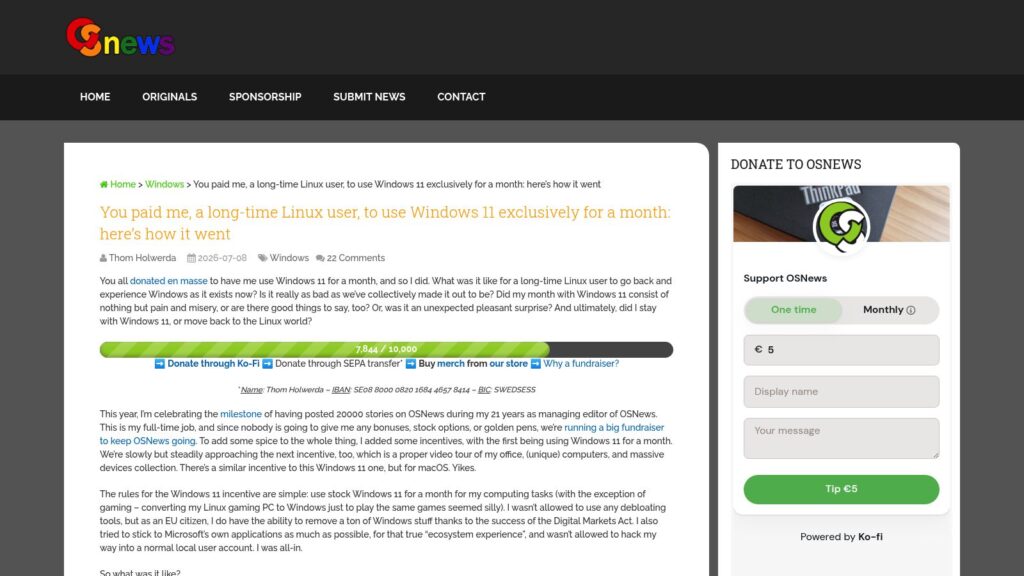
I Ditched Linux for Windows 11 for One Week

User's experience switching from Linux to Windows 11 revealed numerous issues: difficulty creating a local account, incompatibility with Google Passkeys, frustrations with an email client, persistent natural scrolling settings, intrusive ads, and excessive resource usage. Ultimately, the week-long trial underscored a preference for Linux's control and efficiency.

https://www.zdnet.com/article/i-ditched-linux-for-windows-11-for-one-week-and-found-9-big-problems/

Scroll to Top